Source: Sudaneseonline
Darfuri Human Rights Defenders Arrested in Khartoum
(1 November 2010) Between 4 and 4:30 PM on 30 October, six Darfuri human rights defenders disappeared in Khartoum. It was confirmed on 31 October that all six individuals had been arrested, though no charges have been pressed. Some of the members of the group had just attended a youth forum on social development hosted by Girifna, a pro-democracy student movement.
The first disappearance occurred in Suq al Arabia in downtown Khartoum, when National Intelligence and Security Services (NISS) agents arrested Abdelrahman Mohamed Al-Gasim, a prominent human rights defender from Tulus, South Darfur. Mr. Al-Gasim is based in Khartoum and is the Legal Aid and Training Coordinator of the Darfur Bar Association. He was not seen by his family and never returned home, and his mobile has been switched off since Saturday evening. On 31 October, his family received confirmation that he had been arrested, though no charges had been pressed and they were not allowed access to him. He is being held separately from the rest of the group.
Another round of disappearances occurred almost immediately after, suggesting a coordinated effort by the NISS. The arrested individuals are:
· Dirar Adam Dirar, a finance and administration officer with the HAND network. HAND is a coalition of nine grassroots Darfuri organisations that publishes weekly human rights monitoring reports from Darfur.
· Abdelrahman Adam Abdelrahman, the Deputy Director of HAND’s network.
· Manal Mohamed Ahmed, activist
· Aisha Sardo Sharif, activist
· Aziza Ali Edris, activist
The three female activists arrested, Manal Mohamed Ahmed, Aisha Sardo Sharif, and Aziza Ali Edris are not affiliated with HAND. It was announced on the 31 October that they would likely soon be released. As of 1 November, the entire group remained in the NISS’ custody.
A group of lawyers in Khartoum have organised a submission for clarification on the arrest of Abdelrahman Mohamed Al-Gasim and any charges brought against him. Information available to the African Centre indicates that the group was arrested for no reason other than their association with other human rights defenders and members of civil society. The freedom of expression and association are protected under Article 39 (1) of the Interim National Constitution (INC) of 2005, and Article 19 of the International Covenant on Civil and Political Rights. That there is little information on the detainees’ whereabouts, treatment, and of any charges pressed against them is of great concern, as is the fact that they are being held by the NISS. The African Centre calls on the Government of Sudan and Ministry of Justice to respect their international commitments and the INC, and either release the group immediately or charge them with an internationally recognised offence and allow them access to a lawyer and their families.
That the arrests of the Darfuri human rights defenders occurred in two separate places and after members of the group attended a youth forum shows the NISS’, and by extension the Government of Sudan’s, unflinching resolve to suppress independent voices. The disappearances appear to have occurred in coordination, raising serious concerns that other waves of disappearances may take place. That the group simply disappeared and it was announced the following day that they had been arrested shows a lack of respect for procedural safeguards and due process designed to protect detainees.
When viewed in relation to the upcoming voter registration and referendum in the South, and the end of the interim period throughout the country, the arrests are particularly jarring and show the determination of the Sudanese government to suppress civil society during this critical time, and the extent to which the freedom of expression, and in turn, a national dialogue about the future of the country, will not be tolerated.
Other sources: Human Rights Watch
Thursday, November 11, 2010

Friday, October 22, 2010
Upfront Africa-Voice Of America: Upfront with Alsarah

Sudanese singer Alsarah wears many hats-- songwriter,ethnomusicologist,activist and all round world citizen. She started her musical training at the age of 12 in Khartoum.She says that her sound is influenced by her life in Sudan,Yemen and the US where she moved as a teenager in the 90's.
Alsarah speaks passionately about the situation in Sudan ahead of a historical referendum that could separate the north from the south. "We are going to lose of big part of our people and culture" She says. Currently resident in Manhattan,Alsarah performs to audiences from around the world. Her performances are eclectic, electrifying, eccentric--a combination of genres--hip hop,African soul and gnawa dropping coy manifestos and clever metaphors about socio-political issues like elections,human rights etc. A few weeks ago she joined activists at the UN headquarters to bring attention to Sudan. I reached her in New York -- a melting pot of cultures--where her unique sense of self has shaped her world view and in essence her music.
Tuesday, September 28, 2010
Judge Goldstone slams ‘unfair’ comments on ICC

Source
September 28 2010 at 12:29am
By Kenichi Serino
AP
Judge Richard Goldstone
Johannesburg - The criticism that the International Criminal Court (ICC) is against African countries is unfair, Judge Richard Goldstone said on Monday.
“It is unfair to say the court is being used against African countries,” Goldstone said at a lecture at the University of Johannesburg.
He acknowledged that this was a perception because of Africans appearing before the court.
The ICC has opened up five investigations into the Democratic Republic of Congo, the Central African Republic, Uganda, Kenya and Darfur in Sudan.
Goldstone said, however, this would change in the near future as individuals in Latin America were coming under investigation.
He added that the ICC only began its activities after officials in those countries declined to open their own investigations.
In the case of Kenya, the country's parliament refused to begin an investigation into post-election violence in 2007.
“It's a court of last resort, not a court of first resort,” said Goldstone.
He also commented on Kenya's hosting of Sudanese president Omar Al-Bashir at a ceremony celebrating its new constitution.
Al-Bashir has been indicted by the ICC for crimes in Darfur.
As a signatory to the ICC treaty, Kenya was obligated to arrest but refused to do so.
This is in contrast, said Goldstone, to South Africa where Al-Bashir was warned not to enter the country for President Jacob Zuma's inauguration or risk arrest.
Goldstone said that while no action could be taken against country's such as Kenya, they did risk becoming “pariah states”.
“There is no action against countries that do not fulfill their obligations under the treaty except to become pariah states,” he said. - Sapa
Saturday, August 14, 2010
Concerns over violence continue...
A diverse group of activists from Amherst, Holyoke, and Albany @ the Information table on 8/7/10
For a long time our Darfur Coalition in Western Mass continued to bring to attention the plight of civilians in the camps where violence targeted them from two sides: the government militia and as a result to fight among rebel groups.
Women in Darfur are raising their voices and calling to end violence.
The following petition was circulated by Sisterhood for Peace network
To: Leaders of Darfurian Movements
We are Darfurian women who are in displaced persons camps, villages, rural areas, towns, and valleys of Darfur and scattered as refugees around the world, as well as women from all over Sudan who advocate for peace and for a solution to the Darfur conflict. We appeal to you to unite in order to end the suffering of the people of Darfur, especially women and girls whose rights have been violated, and who continue to face violence, rape, and early pregnancy.
We are tired of the war and violence, and want our sons and daughters to grow up in a country where they can enjoy their full rights and where peace and security prevail.
We, the women of Darfur, have united to heal the wounds. We have built our power. It is time for the Darfurian movements to unite. We want you to remember that everyday a young woman is raped, and another leaves school. We have already lost a generation and do not want to lose other generations. We cannot wait any longer.
Let us make sure that the International Day for Peace (21 September 2010), is the day when we take the first step toward unity and toward achieving peace in Darfur and Sudan.
Darfurian Women Demand Peace (DWDP)
--------------------------------------------------------------------------------
We are Darfurian women who are in displaced persons camps, villages, rural areas, towns, and valleys of Darfur and scattered as refugees around the world, as well as women from all over Sudan who advocate for peace and for a solution to the Darfur conflict. We appeal to you to unite in order to end the suffering of the people of Darfur, especially women and girls whose rights have been violated, and who continue to face violence, rape, and early pregnancy.
We are tired of the war and violence, and want our sons and daughters to grow up in a country where they can enjoy their full rights and where peace and security prevail.
We, the women of Darfur, have united to heal the wounds. We have built our power. It is time for the Darfurian movements to unite. We want you to remember that everyday a young woman is raped, and another leaves school. We have already lost a generation and do not want to lose other generations. We cannot wait any longer.
Let us make sure that the International Day for Peace (21 September 2010), is the day when we take the first step toward unity and toward achieving peace in Darfur and Sudan.
Darfurian Women Demand Peace (DWDP)
--------------------------------------------------------------------------------
Last week, Aug 7th, WMDC joined again the local chapter of Amnesty International in Downtown Amherst  and set up a table for information on the crisis in darfur.
The event drew many activists who discussed strategies to stop the violence in darfur.
Among activists who stopped by to sign petitions was Ms. Tamador Sheikheldin, writer, poetess, and theater director from Sudan who has been living in the area for a while since she had to flee her country in the early 1990. "I will tell people in Sudan about the great solidarity work here in the valley with the people in Darfur" She said in appreciation for the tireless efforts of human rights activists she witnessed whenever she came to the Amherst Farmers Market.
"I really admire the work of WMDC in bringing the voice of women to the world. We need to stop violence against women and children in the camps" said Ms. Mahasin Alnaggar, and activist from Albany who expressed interest to start similar group in her upstate New York town.
Friday, August 06, 2010
NY Times: Increase of Violence in Darfur

"Violence Said to Be Rising in Sudan's Darfur Region"
By NEIL MacFARQUHAR
Published: August 4, 2010
UNITED NATIONS — Violence in the turbulent Darfur region of Sudan has spiked over the past several months, Alain Le Roy, the head of United Nations peacekeeping operations, said Wednesday. He attributed the increase to a combination of factors, including fitful peace talks, renewed tribal rivalries and overall tension in Africa’s largest nation as its south prepares for an independence referendum.
Calling the situation a “bleak picture,” Mr. Le Roy told a news conference that security had deteriorated significantly as optimism for a cease-fire in 2009 faded.
Recent United Nations statistics indicated that killings this year already rivaled the 832 violent deaths recorded for all of 2009. May alone, with 400 deaths, was the bloodiest month since peacekeeping forces were deployed in December 2007.
It is difficult to boil down the complicated tapestry of actors in the region, especially as rebel movements have splintered and increasingly well-armed criminals have flourished in the seven years the war has dragged on. Some recent bloodshed was even pegged to a Ponzi scheme that bilked thousands of their savings.
First, in May, the Justice and Equality Movement, or JEM, Darfur’s most powerful rebel group, broke off peace talks that had been taking place in Doha, Qatar, after the Sudanese government rejected its demand that it be the sole negotiator for the rebels at the table. Since then, the group has been trying to reassert itself militarily, and was forced into some confrontations after neighboring Chad improved ties with Khartoum and closed off the group’s usual escape routes over the border.
Second, the conflict was first set off by clashes between nomadic Arab tribes and more sedentary Africans over water supplies. With some two million people, mostly Africans, displaced from their lands, the Arab tribes are now fighting among themselves for the spoils, and water resources are even scarcer.
Third, southern Sudan, which has fought the north for 50 years in a war that has killed about two million people, is expected to vote for independence in a Jan. 9 referendum. The government in the north wants to pacify Darfur before the referendum — both because Darfur will take on added weight in the smaller country that Sudan will probably become and to discourage any Darfuri notions about breaking away.
“They want to reassert their political and military control,” said Fabienne Hara of the International Crisis Group. “They are very scared that Darfur will not be under their control by January 2011.”
The United Nations peacekeepers remain locked in constant confrontation with the government. For example, an Egyptian peacekeeper bled to death in May after the government refused to allow a helicopter flight for his evacuation, United Nations officials said. The Sudanese government regularly professes its full cooperation.
Much of the international attention on Sudan is focused on ensuring that the Comprehensive Peace Agreement signed in 2005 between the north and the south does not collapse as it reaches its most critical moment. Just five months away from the independence vote, the commission to supervise the balloting lacks a leader, and knotty questions, including who will be eligible to vote, remain unanswered.
Larger issues like dividing oil resources between the north and south also remain to be negotiated.
Some analysts fault the Obama administration for lacking a clear-cut policy on Sudan, divided between the softer line of Maj. Gen. J. Scott Gration, President Obama’s Sudan envoy, and the more confrontational approach often voiced by Susan E. Rice, the United States ambassador to the United Nations.
They deny a rift, but one senior State Department official said that Washington was still struggling to define a policy. “There is no sense of urgency that this is a crucial moment and we have to craft it,” said the official, speaking anonymously because of a lack of authorization to speak publicly on the matter.
Saturday, July 17, 2010
Eat Purslane and support Girifna!

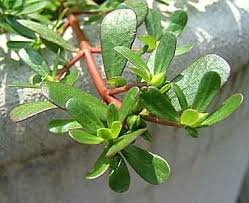
We are tabling again at the Farmers market with Amnesty International local chapter.. this time we are motivating people to support Girifina Movement for human rights by giving away the healthy Purslane with an easy-to-follow recipe of how it's cooked in Sudan
Sudanese Purslane with Lentil Stew
Purslane is very nutritious vegetable. It's a good ource of antioxidants and has more heart-healthful omega-3 fatty acids than any other vegetable that's been studied.
Serving 4-6 persons:
1 cup red lentils
½ cup of vegetable/canola oil
2-medium chopped onions
3 peeled cloves garlic (finely chopped)
1 ½ pounds of Purslane (leaves and tender stems), washed and chopped coarsely.
1-2 tablespoon Tomato paste
½ teaspoon Ground pepper
1 teaspoon cumin
Salt to taste
Method:
Wash and drain lentils (you may soak it over night)
In a large pot, combine the lentils with 3 cups of water, cover partially and cook over moderate heat until tender, about 45 minutes.
Add Purslane and cook over medium heat for 20-30 min.
In a medium non-stick saucepan, heat the oil, stir in the onion and garlic, cover and cook until softened but not browned, about 3 minutes. Add the tomato paste, ground pepper, cumin, salt, 1/2 cup of water and bring to a simmer. Cover and cook, stirring for about 10-15 minutes.
Add the sauce mixture from the saucepan into the large pot and let simmer under low heat for 20 min
Purslane stew is served with rice or pita bread and hot sauce with lime juice on the side (I like it with peanut butter hot sauce)!
Saturday, July 03, 2010
Tabling @ Amherst Farmers Market...
photo taken @ the Amherst Farmers Market
Today, we had our first Tabling activity this summer @ the Amherst Farmers market...
It was a great successful event... many people stopped by to engage in discussion and get updated on the situation in Darfur and Sudan...
A small leaflet on Girifna Movement was handed out to people on the streets... Thanks to Smith STAND for their active work...
I got a call from Radio Girifna and they were interested to post some of the WMDC activities on their website... They also requested some interviews with activists from groups that supported and highlighted their work (e.g. WMDC, STAND, Amherst Human Rights Commission)
Congrats to the teamwork.... Our next table event will be on 7/17 in joint work with Amnesty International Chapter of Amherst (Group-128)

Today, we had our first Tabling activity this summer @ the Amherst Farmers market...
It was a great successful event... many people stopped by to engage in discussion and get updated on the situation in Darfur and Sudan...
A small leaflet on Girifna Movement was handed out to people on the streets... Thanks to Smith STAND for their active work...

I got a call from Radio Girifna and they were interested to post some of the WMDC activities on their website... They also requested some interviews with activists from groups that supported and highlighted their work (e.g. WMDC, STAND, Amherst Human Rights Commission)
Congrats to the teamwork.... Our next table event will be on 7/17 in joint work with Amnesty International Chapter of Amherst (Group-128)
Subscribe to:
Posts (Atom)