Sunday, February 28, 2010

UN Welcomes Doha Agreement on Darfur

image source: www.sudanwatch.blogspot.com/2009_02_01_archive.html


Article Date: 17:40 2010/02/24


New York, February 24 (QNA) - United Nations Secretary-General Ban Ki-moon has welcomed the agreement to resolve the conflict in Darfur signed in Doha late on Tuesday. The Secretary-General said the accord represents an important step towards an inclusive and comprehensive peace agreement for Darfur, which will address the underlying causes of the conflict and the concerns of all Darfurian communities. In a statement issued by his spokesman, the Secretary-General says he looks forward to the full implementation of the provisions of the agreement. He encourages all parties to engage in the inclusive Doha peace process with flexibility and a political vision as well as to agree on a definitive political settlement of the Darfur crisis. The Secretary-General says the United Nations and the African Union -UN Joint Chief Mediator will continue to assist the parties in their efforts to achieve this important objective.
------------------------------------------------

The Agreement twelve articles can be found in the following link
http://www.sudaneseonline.com/cgi-bin/sdb/2bb.cgi?seq=msg&board=260&msg=1267138437

المادة (1)

اعلان وقف اطلاق النار والشروع في في المفاوضات فورا من اجل الاتفاق علي تطبيقه
المادة (2)

اصدار عفو عام بحق اعضاء حركة العدل والمساواة السودانية ,المدنيين والعسكريين واطلاق سراح سجناء الحرب والمحكوميين من كلا الجانبين بعد التوقيع النهائي علي هذا الاتفاق
المادة(3)

مشاركة حركة العدل والمساواةفي السلطة علي كافة مستويات الحكم وفقا لكيفية الاتفاق عليها بين الجانبين
المادة (4)

تتحول حركة العدل والمساواة السودانية الي حزب سياسي فور التوقيع علي اتفاق السلام الشامل والنهائي
المادة(5)

ادماج قوات حركة العدل والمساواة السودانية في القوات المسلحة وقوات الامن والشرطة الموحدة ,وفقا لما يتفق عليةالطرفان ويسبق هذا الاجراء تجميع وتدريب هذه القوات في مواقع وفقا لآلية وكيفية يتفق عليها الجانبان
المادة (6)

تتحمل حكومة السودان كافة النفقات اللازمة لقوات حركة العدل والمساواة السودانية اثناء فترة التجميع والتدريب
المادة (7)

يعاد الي الخدمة كل اعضاء حركة العدل والمساواةالسودانية العسكريين الفصولين والمدنيين عن الخدمة ويتم الحاقهم برصفائهم بالكيفية التي يتفق عليها الطرفان.
المادة (8)


تلتزم حكومة السودان بتعويض النازحين واللاجئين,وكافة المتضررين بسبب النزاع في دارفور تعويضا عادلا ,كما تلتزم حكومة السودان بضمان حق العودة الطوعية للنازحين واللاجئين الي مناطقهم الاصلية ,وانشاء مؤسسات خدمية وبنية تحتية لضمان حياة كريمة لهم.
المادة(9)

يخضع موضوع اعادة التنظيم الاداري في دارفور لمفاوضات بين الجانبين للوصول الي الاتفاق النهائي
المادة(10)
يخضع موضوع تقاسم السلطة والثروة للمفاوضات بين الطرفين للوصول الي الاتفاق النهائي ,وكذا قضايا الارض والحواكير , واي قضايا اخري لتحقيق السلام يراها الطرفان ضرورية لاكمال موضوعات اتفاق السلام الشامل
المادة (11)

ينبني تطبيق هذا الاتفاق بين الطرفين علي حسن النوايا وعلي اساس تضامن وشراكة سياسية وفق مبادئ وقضايا وطنية توحدبين الطرفين
المادة 12

يتم اعداد الاتفاق النهائي والبرتكولات الاضافيه المنفذه له والتفاوض عليها وتوقيعها في الدوحة قبل الخامس عشر من مارس 2010

Wednesday, February 24, 2010

Good News: 57 Detainees on Death Row Freed..

The Questions now: What about the other 48 detainees? were they already been executed?

Sudan has freed 57 prisoners from a key Darfur rebel group, the Justice and Equality Movement (Jem), officials say.

President Omar al-Bashir announced the releases during a speech in Darfur's capital El Fasher, and declared: "The war is over."

The releases are part of a ceasefire deal signed on Tuesday by Mr Bashir and Jem leaders - formerly bitter enemies.

The deal raises hopes of an end to years of conflict in Darfur, however some rebel factions have not signed up.

Jem's leader, Khalil Ibrahim, hailed the deal as "a very important step".
read more

Monday, February 22, 2010

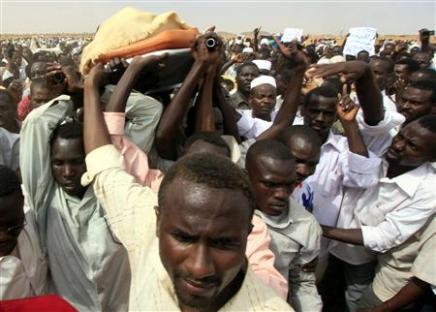
Darfuri Student Laid to Rest Amid Tear Gas and Bullets


by Michelle

Published February 17, 2010 @ 09:50AM PT


A funeral in Khartoum turned into a political lightning rod yesterday, as friends and family mourning the death of Darfuri student activist Mohamed Musa Abdella Bahraldien -- at the hands, according to witnesses, of government security forces -- were joined by over a thousand supporters, presidential candidates, and riot police alike. The burial of the 23-year-old was interrupted by the liberal use of tear gas and rubber bullets by the police.

The suspicious death comes at a time of rising tensions, coinciding with the start of campaigning for presidential elections in April, and is for many emblematic of the ruling National Congress Party's (NCP) blatant disregard for basic human rights. Ongoing restrictions on freedom of expression, association, and assembly throughout Sudan threaten the legitimacy of the elections before they even happen, and the status of Darfur -- where emergency laws in place for the last 13 years are even more restrictive and fighting between rebels and government forces has intensified in recent weeks -- is particularly troublesome. The government's commitment to a ceasefire, much less peace, seems to last about as long as it takes a bomb to fall from an Antonov to the ground, and the rebels aren't much help, either.

But as opposition candidate Yasir Arman said yesterday, "This crime wasn't committed in a far village in the rural areas of Darfur. It was in the heart of the capital, a few kilometers from the [president's] palace." He may have made a campaign opportunity out of a funeral, but his comment is precisely on mark.

Wednesday, February 17, 2010

Welcome David Morse to Amherst..

Human rights activist and journalist David Morse is passing through Amherst this week and will be attending the WMDC monthly meeting tonight....
David has been active in the issue of Sudan and Darfur in particular for the past decade.
Welcome David....
image source: www.inthesetimes.com

Thursday, February 04, 2010

The Hampshire Daily Gazette interview with WMDC


Advocates keep focus on Darfur: Election, partition may reignite trouble


Bloodshed in Darfur declined in 2009, but for Valley experts and advocates, this is no reason to relax their vigilance.

With a refugee population in the millions, skirmishes still breaking out in western Sudan, two pivotal elections on the horizon, and oil reserves at stake, the situation in Darfur - officially characterized by the U.S. as genocide in 2006 - is far from resolved.

Local Darfur advocates are attempting to bring focus back to the region in the hopes of quashing violence before it flares up again.

There is fear that the April presidential election and an historic 2011 vote that could give oil-rich southern Sudan autonomy could provoke more violence. More than half of the government's revenues are derived from oil fields, according to the U.S. Energy Information Administration. These oil resources may no longer be available to the government, whose power is concentrated in the north, should the south secede.

"Unfortunately, this is not coming to a close," said Mohamed Elgadi, an activist and former Sudanese political prisoner now living in Amherst. Elgadi is co-founder of the Western Massachusetts Darfur Coalition and the Darfur Alert Coalition in Philadelphia. Elgadi came to America with his wife about 15 years ago.

"It's a very good positive that there is less violence," Elgadi said, "but unfortunately the status quo continues and people cannot go back to their villages."

Darfur slipped from the headlines in 2009 as violence between the allegedly government-backed Arab Muslim north and the militia-supported black Christian south over scarce resources declined.

Yet, violence continues to plague the region.

From January 2008 through July 2009, close to 2,500 people were killed, according to the most recent data from the African Union Panel on Darfur.

Since violence erupted in 2003, hundreds of thousands of Sudanese have been killed and another 2.5 million have fled their villages, opting for life as refugees, according to Amnesty International. Exact figures on injuries, fatalities and people displaced are difficult to verify because Darfur is a restricted area.

"Violence continues and the threat of violence, which is just as important, continues," said Eric Reeves, a Smith College professor who has been analyzing the situation in Darfur for more than a decade.

Reeves has testified several times before Congress, has lectured widely in academic settings, and has served as a consultant to a number of human rights and humanitarian organizations operating in Sudan.

"It doesn't match the ferocious clashes of 2003 and 2004, but that does not mean that significant violence is not occurring," Reeves said.

April may be a tipping point for violence as Sudan holds its first multiparty presidential election in 24 years. President Omar al-Bashir, who has governed the country since orchestrating a military coup in 1999, could be re-elected. Bashir has been charged with war crimes and crimes against humanity by the Hague-based International Criminal Court for allegedly orchestrating a campaign of murder, torture, rape and forced expulsions in the seven-year-old conflict in the western region of Darfur. An appeals panel this week declared that the ICC had enough evidence to charge al-Bashir with genocide, which it declined to do in March.

In 2011, the Sudanese will vote on a referendum that could give the southern Sudan region autonomy.

Reeves said the south's secession is heavily favored, but the government may be unwilling to allow the area autonomy regardless of the vote.

"There will be violence, either pre-emptive or because the results were not upheld by Khartoum," Reeves predicted.

Williamsburg resident Keith Harmon Snow, however, believes the referendum is less about autonomy for the south and more about control of its resources, namely oil. If the south secedes, both the north and the south would have to agree to a new border that could cut the oil-poor north off from a significant revenue stream.

Snow has worked on the Horn of Africa as a consultant on genocide and humanitarian aid for the United Nations, as well as a genocide investigator for Genocide Watch and Survivors Rights International.

"The south has its autonomy already for the most part," said Snow, noting the area has its own government and flag. "The idea that an election will determine the autonomy of the south is another stage in the conquest of Sudan by western powers."

Snow contends the violence and social upheaval in Darfur is a concoction of many different international players who wish to control or overthrow the Sudanese government in an effort to harvest the country's oil and other natural resources.

United Nations peacekeeping troops, which arrived in Sudan in 2007 along with troops from the African Union, serve private corporate interests over humanitarian ones, Snow said. He also does not believe the situation in Darfur is genocide. The number of people killed has been inflated, in some reports up to 450,000, he said, to manipulate well-meaning interests to apply political pressure.

Local action

In anticipation of the elections, Valley sympathizers are working to prevent violence through a campaign of awareness and political pressure.

"We don't know what will happen, the whole country is in chaos," Elgadi said. "No one knows if Sudan will be the same country after all this, but we will know for sure next year."

Reeves, for example, is writing an editorial asking President Obama to make it clear that America will support the outcome of the Sudanese elections. Political pressure of this degree could quash post-election wrangling, he said.

"He has to make the declaration in public that we will support the results of this referendum, no ifs, ands or buts," Reeves said. "If we don't send a clear signal to Khartoum, Bashir will believe it acceptable to resume war or deny the legitimacy of the election."

Reeves said he hopes the article would have the same impact as a piece he wrote for the Washington Post in February 2004, declaring the situation in Darfur genocide and calling for humanitarian aid. The article galvanized public opinion and catapulted Reeves into the center of the Darfur debate.

The Western Massachusetts Darfur Coalition is attempting to follow in Reeves' tracks. The group continues to rally public support by raising awareness of the beleaguered region. Elgadi said the coalition is also reaching out to the two main Sudanese rebel factions, the Justice Equality Movement and the Sudan Liberation Army, calling for them to act responsibly.

Elgadi said these methods are effective. Without grassroots advocacy programs like Western Massachusetts Darfur Coalition, genocide in Darfur would have continued unabated.

"The violence is less thanks to the international grass roots movement, a whole positive thing happened," Elgadi said. "It proves that the pressure on the government of Sudan made some kind of effect."

Wednesday, January 13, 2010

Updating the media on Darfur...


Thanks to your tireless work to make the Darfur issue always present in the media to bring the world attention to this unacceptable crisis...

Last week, the Gazette interviewed 2 of our members on the situation in Darfur and how our WMDC is helping to organize locally around this issue. The Washnigton-based TV network, Al-Hurra, interviewed (in Arabic) mohamed elgadi on the role of international grassroots movement in bringing up the voice of Darfurians in the Camps. This interview was on the Eye on Democracy show that aired twice a week in the Middle East and North Africa.


more info on this to come later

Saturday, October 31, 2009

The New US Policy for Sudan

السياسة الأمريكية الجديدة تجاه السودان
توازن أمريكي أم توازن سوداني؟

إعداد إبراهيم علي إبراهيم المحامي
واشنطن،

بالنظر إلى إستراتيجية إدارة الرئيس أوباما الجديدة تجاه السودان، يتضح أنها تركز على ضرورة تحقيق ثلاثة أهداف رئيسية وهي: وقف الإبادة التي تحدث في إقليم دارفور، وتنفيذ اتفاقية السلام الشامل بين الشمال والجنوب، وضمان ألا يصبح السودان ملاذاً آمناً للإرهابيين الدوليين.

وُصفت هذه السياسة بأنها شاملة ومتزنة تجمع بين الخشونة والمرونة، حيث وعدت السودان ببعض الحوافز التي لم يعلن عنها للمساعدة على إحراز تقدم في كافة القضايا الرئيسية، وفي الوقت نفسه تهدد بعقوبات أكثر صرامة إذا فشل في العمل على تحقيق سلام طويل الأمد. وقد أوضح أوباما أن السودان لن يتلقى أي حوافز خارجية إلا بعد أن يٌحرز تقدماً في كافة القضايا الرئيسية، كما أعلن إنه ينوي تجديد العقوبات القائمة ضد السودان.

بقراءة تحليلية يتضح أن الهدف الأساسي للسياسة الأمريكية الجديدة بشأن السودان هو إعادة تسليط الأضواء على الصراع بين الشمال والجنوب وتركيز الاهتمام بتنفيذ ما تبقى من اتفاقية السلام الشامل (نيفاشا). وهذا نتاج طبيعي للقلق الذي كان ولا زال يساور المسئولين الأمريكيين من أن أتفاق السلام الذي أنهى الحرب الأهلية بين الشمال والجنوب عام 2005 يتعرض للإهمال، وبحاجة إلى إصلاح ومتابعة ومراقبة دقيقة لضمان تنفيذه إلى آخر بند وهو الانتخابات والاستفتاء، وان تركيز الأضواء على مشاكل السودان الأخرى خاصة دارفور قد يضر بهذا الانجاز الأمريكي، ويعرض البلاد مرة أخرى للحرب والفوضى.

هذه الأولوية التي حظي بها اتفاق السلام تؤكد أن إستراتيجية الإدارة الأمريكية تعمل على معالجة كل موضوع في وقته والانتهاء منه check list ، قبل الانتقال للآخر، وهذا يثير المخاوف التي ذكرتها سابقاً من أن هذه الإستراتيجية قد تؤدي إلى "تجميد" قضية دارفور لبعض الوقت لحين الانتهاء من حق تقرير المصير والاستفتاء.

كذلك يلاحظ أن الإستراتيجية الجديدة أعطت أولوية قصوى لموضوع الاستفتاء، حيث قالت أن الهدف يتلخص في قيام دولة موحدة سلمية، أو ينفصل السودان إلى دولتين تعيشان في سلام جنباً إلى جنب. والتزمت الولايات المتحدة بتقديم العون الفني والسياسي، وحثت الأطراف على الاتفاق على قانون الاستفتاء، وقبول نتيجته، والاتفاق على ترتيبات ما بعده لاقتسام الثروة بعد الانفصال إذا تم. كما طلبت من السودان إجراء إصلاحات قانونية لخلق مناخ ملائم للانتخابات النزيهة والاستفتاء.

فيما يتعلق بمجهودات السلام بدارفور دعت السياسة الجديدة لإيجاد حل متفاوض عليه للنزاع في دارفور، وذلك عبر الحوارات التي سيقوم بها المبعوث الخاص مع الحركات المسلحة والحكومة ودول الجوار. وأكدت على أن الولايات المتحدة ستدعم اتفاقية سلام تعالج جذور المشكلة بالبناء على مجهودات دولة قطر لمفاوضات السلام، وتقديم الدعم المباشر للوسيط المشترك لدارفور، وتشجيع المشاركة الواسعة، بواسطة كل ممثلي المجتمع المدني المتنوع والمتعدد في عملية السلام. كما أكدت على أنها ستعمل على تجديد التزام الأطراف بإعلان المبادئ الموقع سنة 2005 الذي يلزم جميع الأطراف والحركات الكبرى للبحث عن حل سلمي للنزاع في دارفور والالتزام باتفاقية وقف إطلاق النار لسنة 2004، وستبحث مع الشركاء على اتفاق لوقف العدائيات.

ومن النقاط المثيرة للاهتمام في طريقة المعالجة الأمريكية لقضية دارفور، هي دعوتها لإعادة تأسيس وتوسيع وتقوية التحالف الدولي الذي ساعد في الوصول إلى اتفاقية السلام الشامل(نيفاشا) للعمل على تحويل الاهتمام الدولي بدارفور إلى التزامات جماعية، للمساعدة في تحقيق السلام وتطوير الأمن والعدالة والتنمية.

وهذا في حد ذاته سيشكل نقلة نوعية جديدة في طريقة التفاوض وربما آلياته، حيث ترشح منظمة الايقاد والشركاء الدوليين للعب دور جديد في مفاوضات دارفور، مما يفرض على الجميع- الوساطة بقطر، والحكومة السودانية، والحركات المسلحة- إعادة وتوثيق الاتصال بشركاء الإيقاد ومجموعة الترويكا الدولية (أمريكا بريطانيا النرويج) وغيرهم من الشركاء الدوليين الذين ساهموا في صياغة نيفاشا وانجازها لتنسيق المواقف. كذلك يشكل هذا تحدياً واضحاً للتحالفات القائمة حالياً التي تدعم قضية دارفور داخل الولايات المتحدة، حيث يطلب منها صراحة أن تكون داعمة لعملية السلام وان تكون مساهمة فيها. وإذا صدق تنفيذ البند أعلاه، فهناك احتمال لأتباع نفس الأسلوب الذي اتبع في التفاوض بين الأطراف، وربما أتباع نفس الوصفة والتسوية الدستورية التي تمت في نيفاشا.

يتضح من هذا إن التوازن الذي قصدت أن تظهر به السياسة الجديدة، ليس توازناً في طريقة تناولها للقضايا السودانية وترتيبها من حيث الأهمية، وإنما توازناً لأطراف الصراع داخل الإدارة الأمريكية نفسها. فأخذت السياسة الجديدة أجزاء من إستراتيجية الجنرال غريشن مثل دعوته لتطبيع العلاقات مع الخرطوم؛ و دعوته إلى الاهتمام باتفاق السلام بين الشمال والجنوب، والتقارب مع الحكومة بدلاً من فرض العزلة عليها. ومن جهة أخرى عملت على إرضاء المتشددين في الإدارة ( هيلاري كلينتون وسوزان رايس) وفي الكونجرس (مجموعة كوكس السودان- فرانك وولف، دونالد بين، والسيناتور فاينغولد) ونشطاء تحالف إنقاذ دارفور وحلفائهم (جيري فولر وجون برندر غاست) حيث نصت على وجود "حرب إبادة" واحتوت على عقوبات لم يفصح عنها حتى الآن.

وأكدت السياسة الجديدة على أن الجنرال غريشن هو الشخص المسئول عن تنفيذها، وسيكون له الصوت الأعلى في متابعتها، رغم الاعتراضات التي ظهرت ضده مؤخرا. وهذا يؤكد أن النزاع بينه وبين وزارة الخارجية قد حسم لصالحه، وان مكتبه رغم وجوده في الوزارة إلا انه يتمتع باستقلال تام في إدارته واتخاذ القرارات الإستراتيجية الخاصة بتنفيذ هذه السياسة، مما يضع أهمية كبرى للتعامل معه من قبل كافة الأطراف، حتى تلك التي لا تحبه.

أعادت السياسة الجديدة إلى الأضواء مرة أخرى موضوع التعاون مع السودان في موضوع محاربة الإرهاب والاستخبارات المتعلقة به، وشددت على أنه موضوع ذو قيمة لها، ولكنها حذرت الخرطوم من استخدامه للمساومة. ولا يزال مكتب المخابرات السودانية مفتوحاً في فرجينيا ويشكل ارتباطاً بين أجهزة المخابرات بين الدولتين ويرأسه العقيد محمد سليمان. و يجب ألا ننسى أن الإدارة الأمريكية تبني وتشيد اكبر سفارة لها الآن في إفريقيا، كل هذا يرجح من احتمال رغبة الإدارة الأمريكية في الإسراع بالتعاون مع السودان إلى مراحل متقدمة إذا قدمت حكومة السودان تنازلات واضحة في المجالات التي ذكرتها الإستراتيجية.